
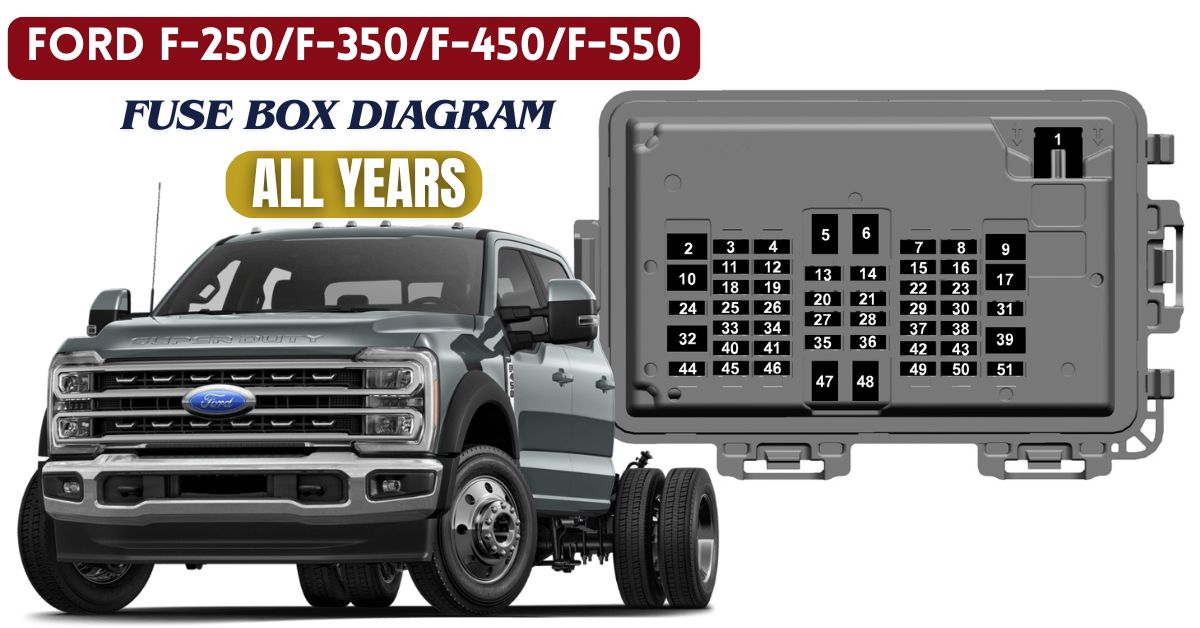
The Ford Super Duty series — F-250, F-350, F-450, and F-550 — is designed for heavy work like towing, hauling, and long-term use. These trucks depend on a strong electrical system to power things like lights, A/C, trailer brakes, windows, and more.
If one of these features suddenly stops working, there’s a good chance the issue is a blown fuse. That’s why knowing where the fuse box is and how the diagram is laid out can save you time and money.
This guide includes fuse box diagrams, locations, and basic troubleshooting tips for all model years of the F-250, F-350, F-450, and F-550.
Table of Contents
Why the Fuse Box Matters?
Every electrical component in your Super Duty — from the engine control unit (ECU) to the trailer lights — is protected by a fuse. These fuses prevent short circuits and electrical overloads that can damage wiring or cause fires.
If a component fails suddenly, it’s often due to a blown fuse. Replacing it with a correctly rated one can restore function instantly — but only if you know where to look and what each fuse controls.
Ford Super Duty Fuse Box Locations
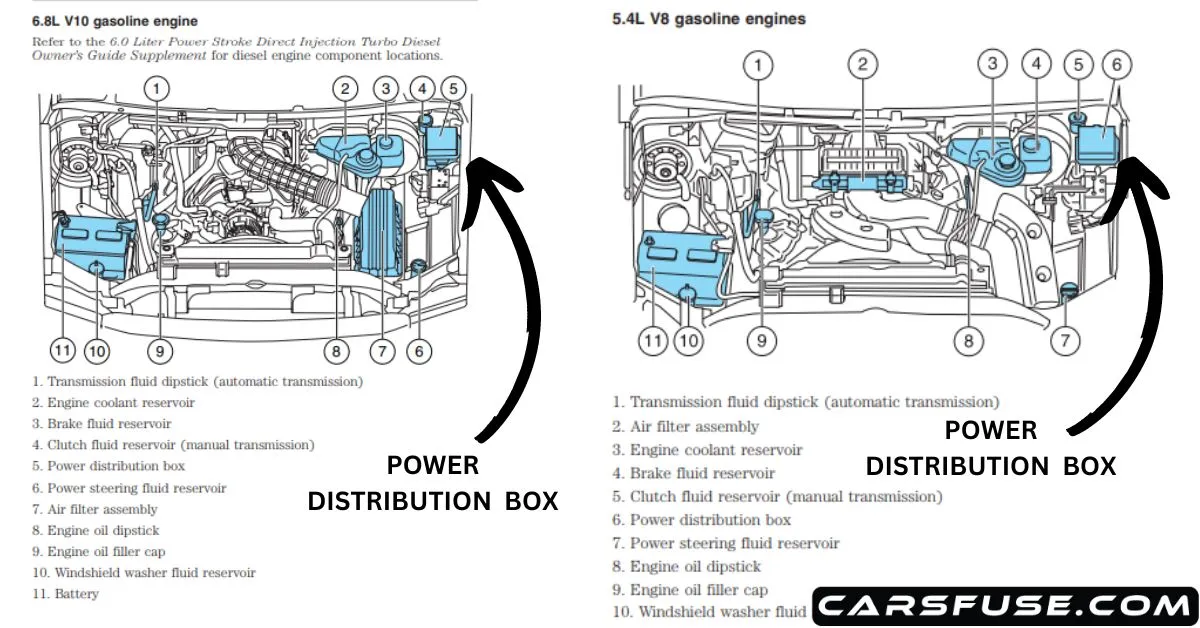
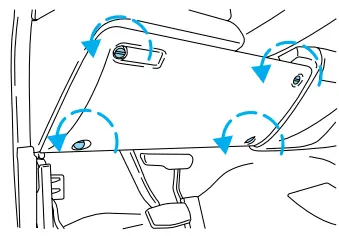
Depending on the year and configuration of your Super Duty (F-250 through F-550), you will typically find two or three fuse boxes:
- Passenger Compartment Fuse Box (Interior):
Located under the dashboard on the driver’s side or behind a side access panel. - Power Distribution Box (Underhood):
Found near the battery or the driver-side fender in the engine compartment. - Auxiliary Upfitter/Trailer Tow Fuse Box (Optional):
Present on models with towing or upfitter packages, usually mounted near the front fender or engine bay.
Each fuse box contains multiple fuses and relays responsible for specific vehicle systems.
Ford Super Duty Fuse Box Diagrams by Model Year
2020–2023 Ford F-250 / F-350 / F-450 / F-550
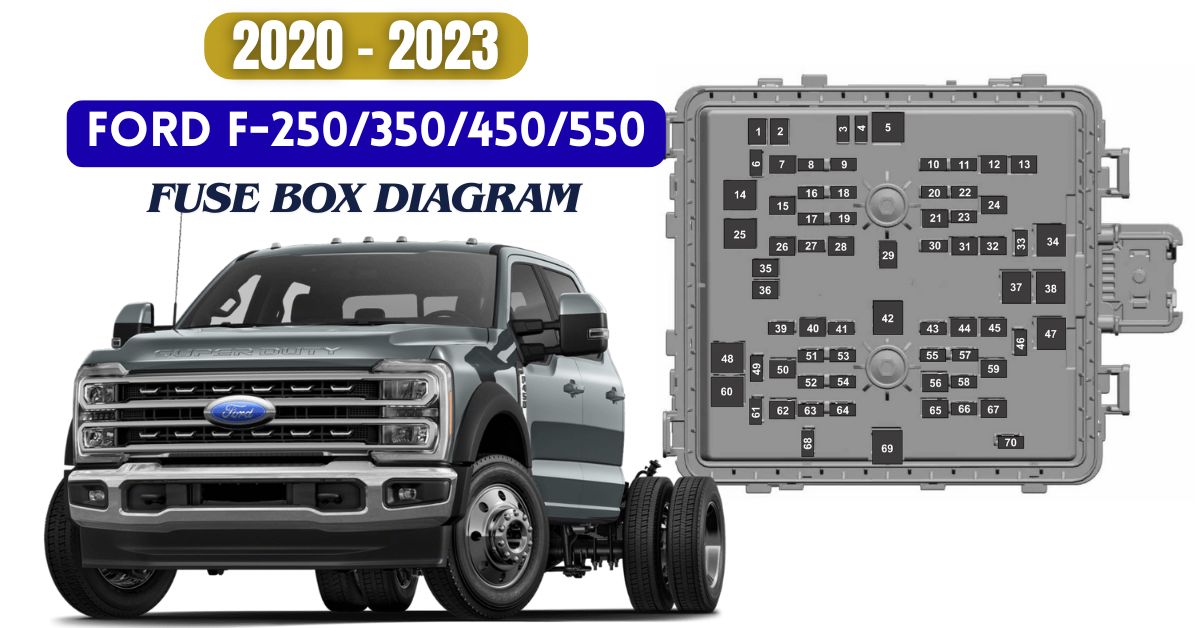
The latest generation Super Duty models use smart fuses and solid-state relays integrated into a modern Power Distribution Box (PDB).
Locations:
- Engine compartment (main PDB): next to the battery on the passenger side.
- Interior fuse panel: under the steering column, above the brake pedal.
Common Fuse Functions:
- Fuse #10 – Power point (12V outlet)
- Fuse #18 – Fuel pump module
- Fuse #29 – PCM (Powertrain Control Module)
- Fuse #50 – A/C compressor clutch
- Fuse #65 – Headlamp control
For Complete Fuse Box Diagrams, Visit Here: 2020-2023 Ford F-250/F-350/F-450/F-550 Fuse Box Diagrams
Tip: Newer diesel variants (6.7L Power Stroke) may include additional fuses and relays for glow plugs, grid heaters, and diesel exhaust systems.
2017–2019 Ford Super Duty (Redesigned Generation)
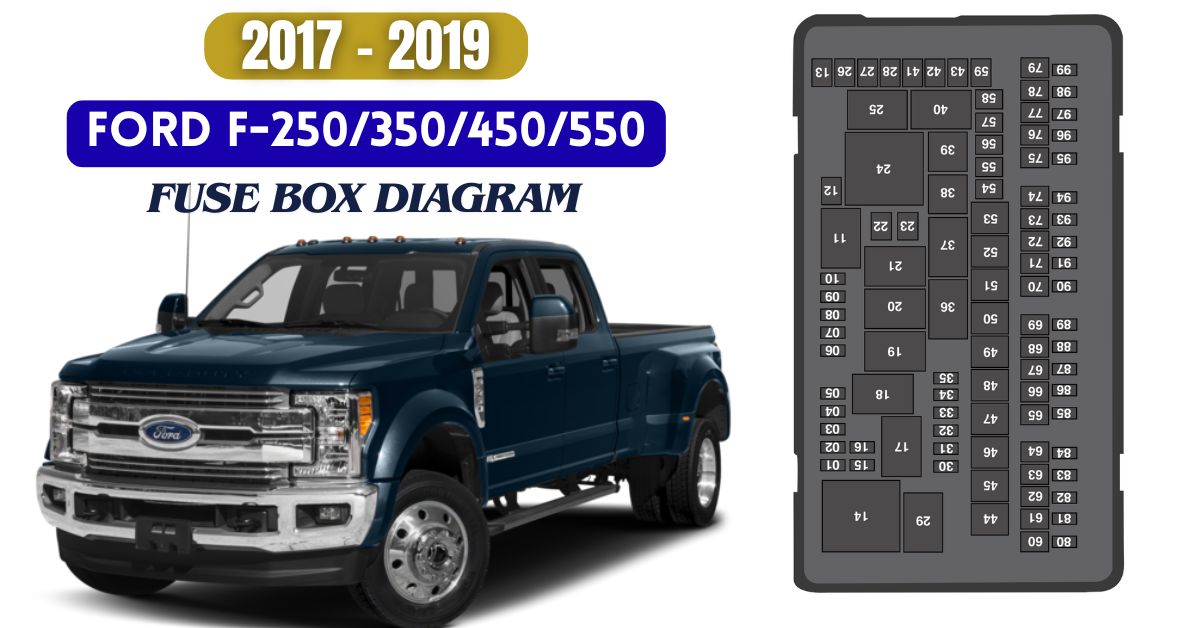
Locations:
- Underhood fuse box (main power): near battery.
- Cabin fuse box: under steering column.
Common Fuse Assignments:
- Fuse #5 – Power mirrors
- Fuse #15 – Rear power sliding window
- Fuse #24 – Trailer tow lights
- Fuse #33 – Wiper system
- Fuse #56 – Fuel injectors
For Complete Fuse Box Diagrams, Visit Here: 2017-2019 Ford F-250/F-350/F-450/F-550 Fuse Box Diagrams
This generation introduced micro relays and solid-state components, improving reliability but making diagnosis slightly more complex.
2010–2016 Ford F-250 / F-350 / F-450 / F-550
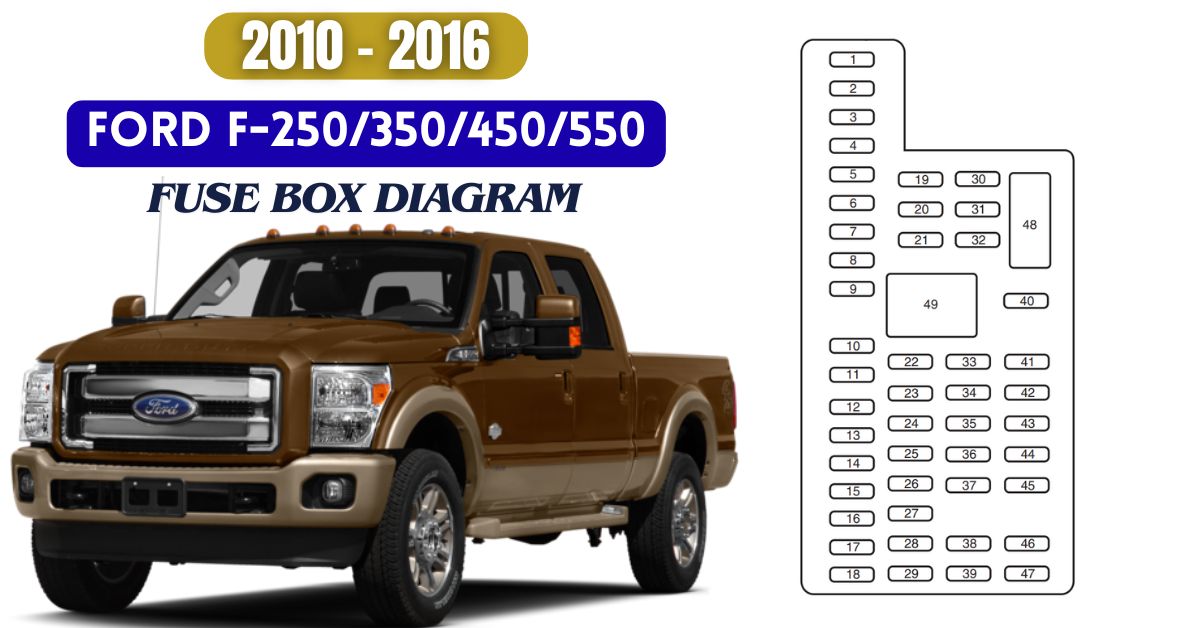
These models feature a large underhood Power Distribution Box and an interior fuse panel near the driver’s side kick panel.
Common Fuses:
- Fuse #8 – Stop lamps
- Fuse #15 – Radio
- Fuse #22 – Power windows
- Fuse #33 – Horn
- Fuse #40 – Trailer brake controller
For Complete Fuse Box Diagrams, Visit Here: 2010-2016 Ford F-250/F-350/F-450/F-550 Fuse Box Diagrams
Known Issues:
Water intrusion near the driver’s kick panel occasionally leads to corrosion on interior fuse terminals.
2008–2009 Ford Super Duty Fuse Box Diagrams
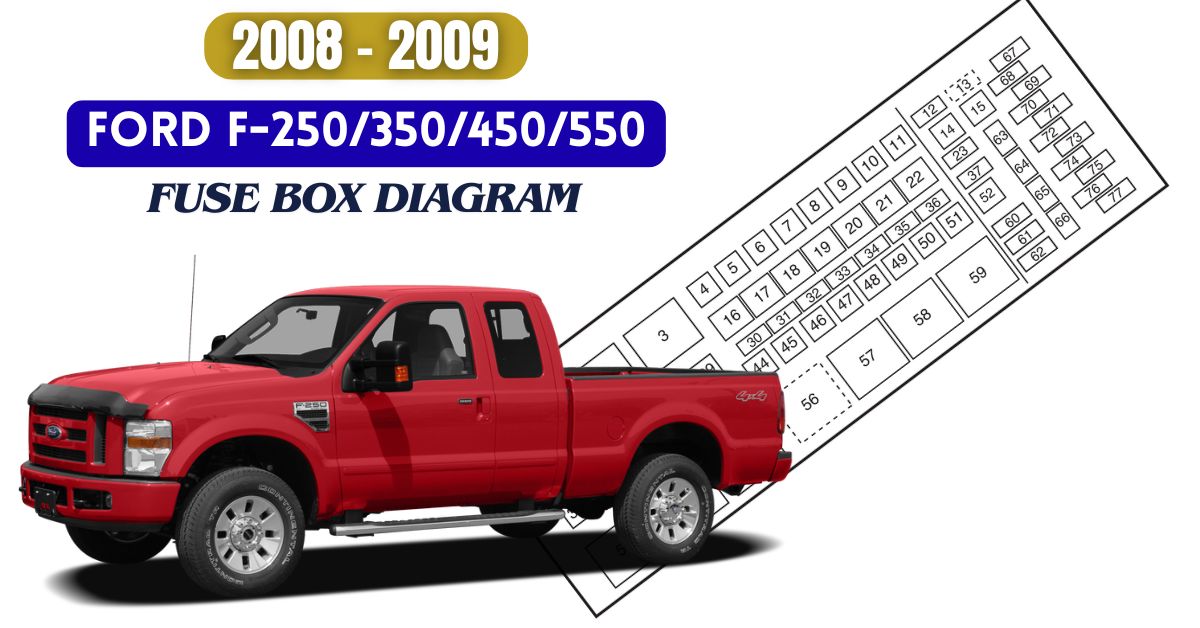
Locations:
- Engine compartment: near driver-side fender.
- Interior fuse box: under dashboard.
Common Fuses:
- Fuse #12 – Powertrain control module (PCM)
- Fuse #23 – A/C clutch relay
- Fuse #34 – Fuel heater
- Fuse #45 – Ignition relay
- Fuse #53 – Wipers
For Complete Fuse Box Diagrams, Visit Here: 2008-2009 Ford F-250/F-350/F-450/F-550 Fuse Box Diagrams
This generation also included upfitter relays for aftermarket lights, plows, or auxiliary equipment.
2005–2007 Ford F-250 / F-350 / F-450 / F-550
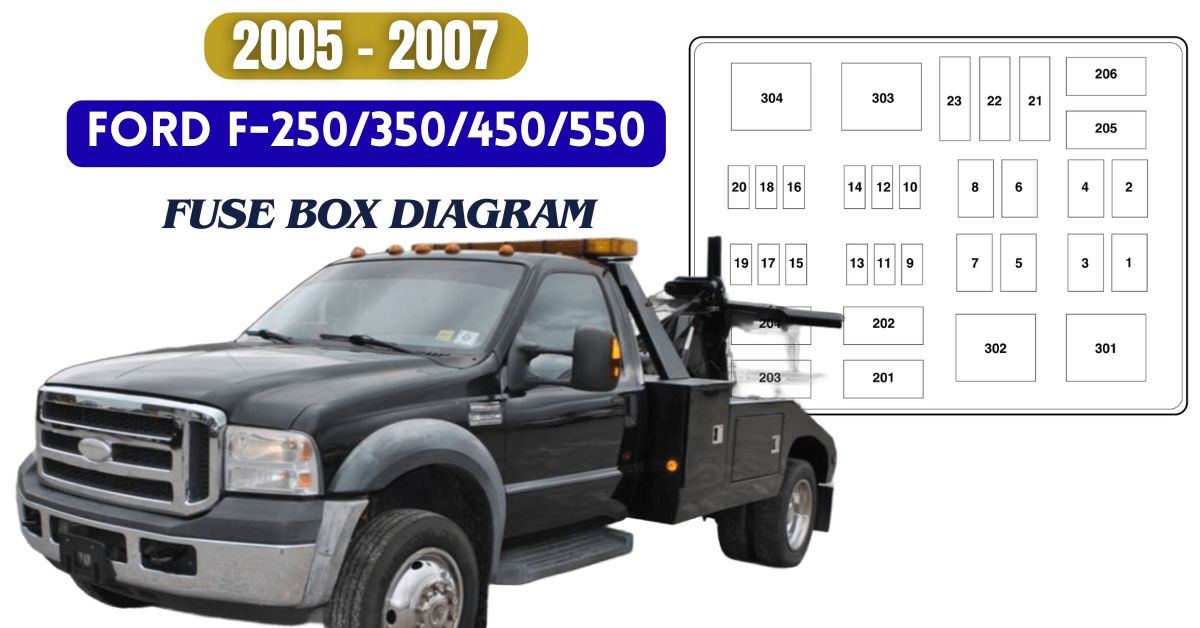
Fuse Panel Locations:
- Passenger compartment: under steering column.
- Underhood: beside battery on driver’s side.
Key Fuses:
- Fuse #9 – Radio and cluster
- Fuse #16 – Fuel pump
- Fuse #28 – Turn signals
- Fuse #42 – Power seats
- Fuse #55 – Trailer backup lights
For Complete Fuse Box Diagrams, Visit Here: 2005-2007 Ford F-250/F-350/F-450/F-550 Fuse Box Diagrams
Common Issue:
Fuse #16 (fuel pump) is known to blow frequently due to harness chafing near the fuel tank.
2002–2004 Ford Super Duty (First Generation)
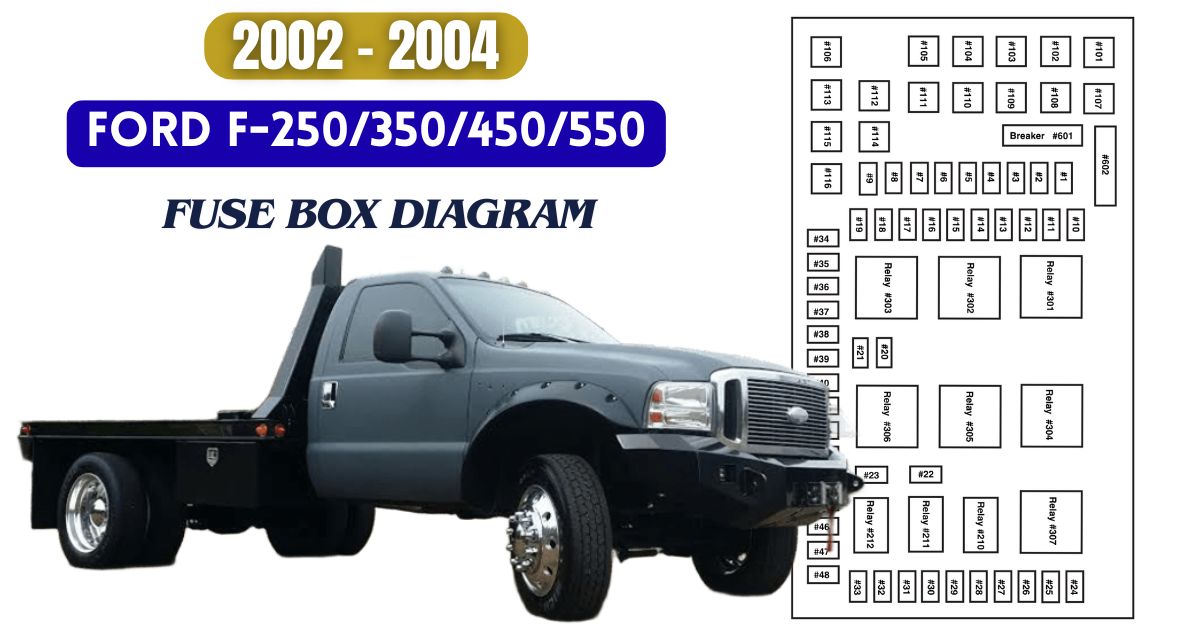
These trucks used a more traditional fuse layout.
Locations:
- Fuse box under dash (driver side).
- Underhood Power Distribution Box near the battery.
Fuse Highlights:
- Fuse #1 – Headlights
- Fuse #5 – Horn
- Fuse #10 – PCM
- Fuse #15 – Trailer tow circuit
- Fuse #23 – Blower motor
For Complete Fuse Box Diagrams, Visit Here: 2002-2004 Ford F-250/F-350/F-450/F-550 Fuse Box Diagrams
Tip: Early 7.3L Power Stroke diesel models include glow plug relays and PCM power relays located underhood in the PDB.
1998–2001 Ford F-Series Super Duty (Early Models)
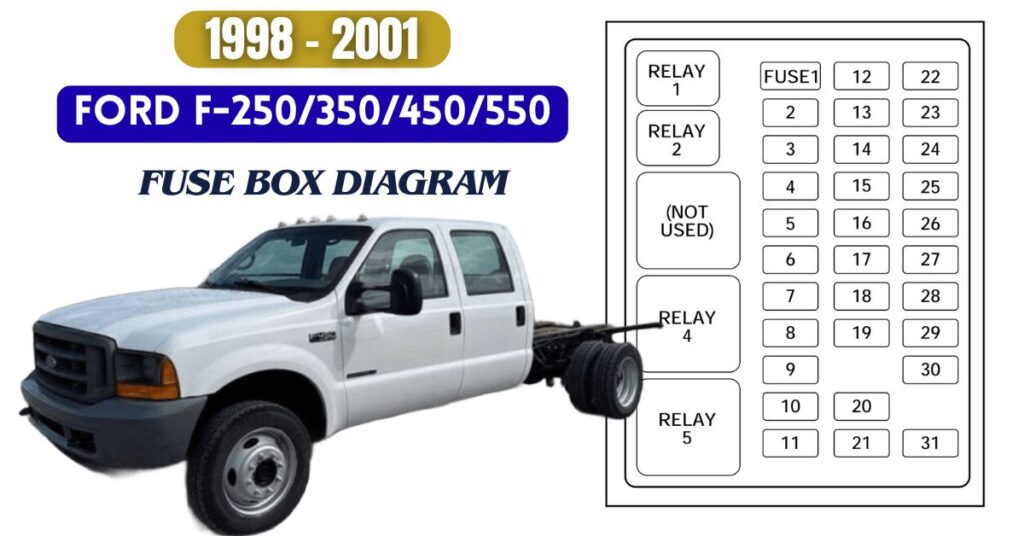
Fuse Box Location:
- Under the dash, left of steering wheel.
Common Fuse Functions:
- Fuse #3 – Turn signals
- Fuse #5 – Stop lamps
- Fuse #7 – Instrument cluster
- Fuse #9 – Heater blower motor
- Fuse #15 – Radio
For Complete Fuse Box Diagrams, Visit Here: 1998-2001 Ford F-250/F-350/F-450/F-550 Fuse Box Diagrams
Common Problems:
Corrosion and weak contacts on older trucks, often due to exposure to moisture and dirt.
1996–1997 Ford F-Series Super Duty (Early Models)
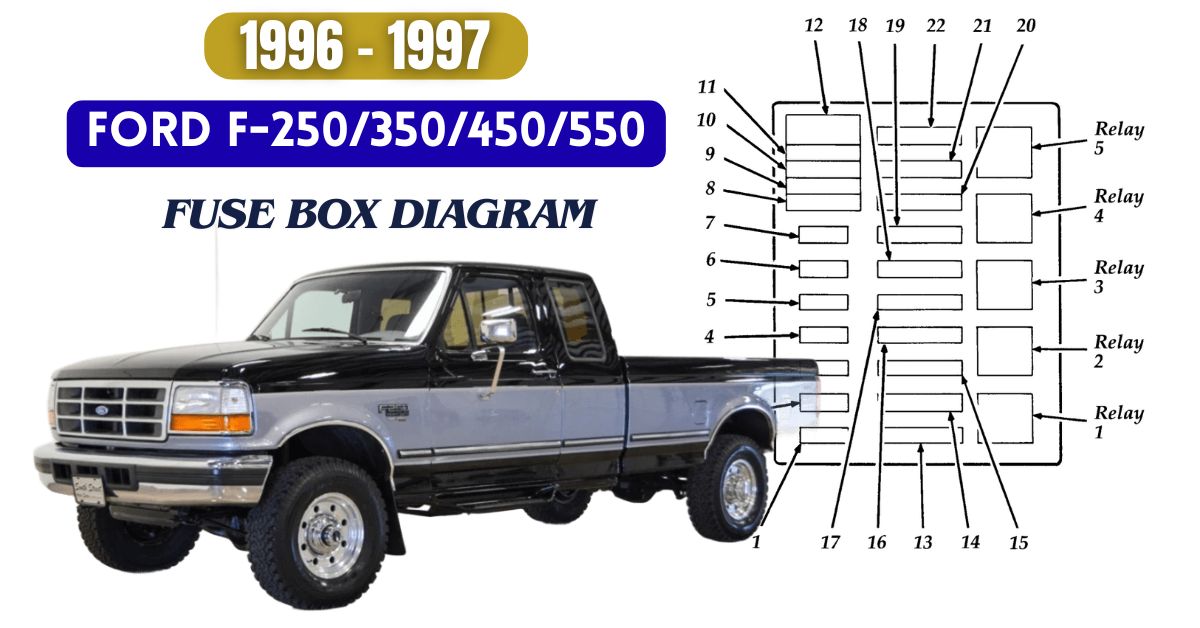
Fuse Box Location:
- Under the dash, left of steering wheel.
Common Fuse Functions:
- Fuse #3 – Turn signals
- Fuse #5 – Stop lamps
- Fuse #7 – Instrument cluster
- Fuse #9 – Heater blower motor
- Fuse #15 – Radio
For Complete Fuse Box Diagrams, Visit Here: 1996-1997 Ford F-250/F-350/F-450/F-550 Fuse Box Diagrams
4. Common Fuse-Related Issues in Ford Super Duty Trucks
| Problem | Common Symptoms | Likely Causes | Quick Fix / Solution |
|---|---|---|---|
| Blown fuse(s) in key circuit | Lights, horn, trailer-tow functions, radio or power windows stop working suddenly | Short circuit, accessory overload, wiring chafing | Replace fuse with same amp rating. Inspect wiring and accessory add-ons for shorts. |
| Corrosion / moisture in fuse box | Intermittent electrical faults, modules losing power or communication, green/white corrosion on fuse terminals | Water intrusion (leaking seals, splash from wheel well), poor sealing of fuse box cover (ford-trucks.com) | Dry out area, clean terminals with electrical contact cleaner, apply dielectric grease, ensure fuse box cover seals properly. |
| Melted or overheated terminals/housing | Burnt smell, melted plastic around fuse box, multiple circuits failing | High resistance connection, overloaded circuit, poor contact | Replace damaged fuse box or housing, ensure connectors are tight, reduce load or re-wire accessories properly. |
| Repeated failure of fuel-pump/engine control fuse | Truck won’t start or dies, engine control light, fuel pump activity erratic | Shorted wiring harness, failing fuel pump or PCM circuit, high draw on that fuse | Inspect fuel pump wiring, check fuse rating and circuit, replace faulty component rather than just fuse. |
| Parasitic drain / battery no-start after sitting | Battery dead overnight, no obvious fuse blown | Modules staying awake (4×4 modules, upfitter circuits), faulty relay, wiring leak to ground (Hillbilly Auto Supply) | Use ammeter to check draw, pull suspect fuse(s) one at a time, check and isolate modules wiring. |
| Missing or uninstalled fuse/relay (e.g., trailer tow circuits) | Specific feature (like trailer charge wire) never worked, fuse slot blank | Factory omission or upfitter wiring incomplete (JustAnswer) | Insert correct fuse and relay per service manual, or have upfitter wiring properly installed. |
Always replace fuses with the same amperage rating and never bypass or use higher-rated fuses — doing so can damage wiring and electronic modules.
5. How to Check and Replace a Fuse
- Turn off the ignition and remove the key.
- Locate the fuse box using your owner’s manual or diagram.
- Use a fuse puller or needle-nose pliers to gently remove the fuse.
- Inspect the metal strip inside — if broken or burned, the fuse is blown.
- Replace it with a new fuse of the exact same rating.
- Turn on the ignition and test the system.
Tip: If a fuse blows again immediately after replacement, a short circuit or component failure is likely present.
6. Preventive Maintenance for the Fuse Box
- Keep the area dry and clean to avoid corrosion.
- Check for loose connections or burnt terminals during oil changes.
- Use OEM-quality fuses and relays for reliability.
- Avoid installing high-powered accessories without separate relays or wiring.
- Inspect seals around the windshield and hood to prevent water intrusion.